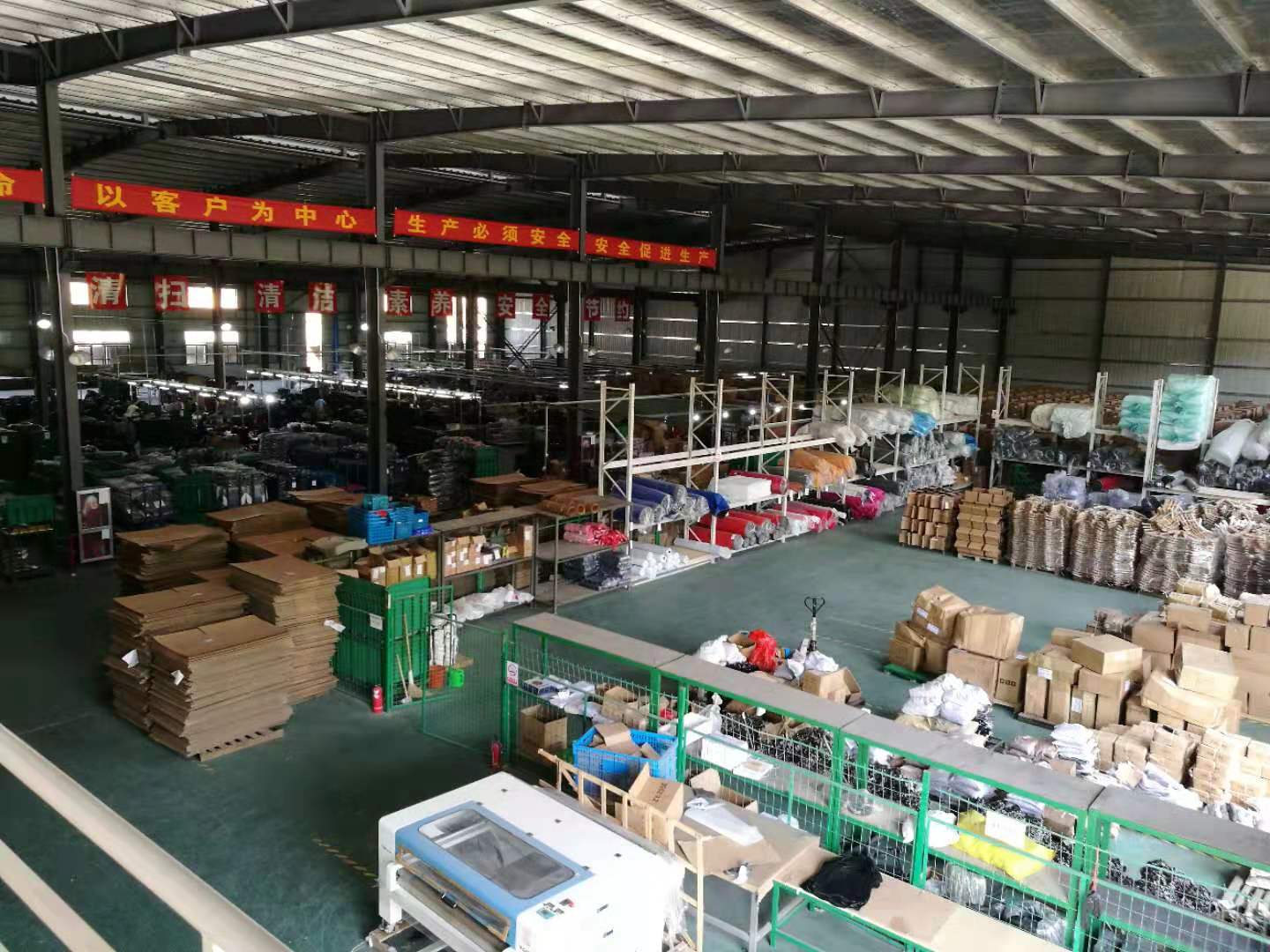
Most advice about sourcing office chairs from China is written by people who have visited factories. This checklist is written by someone who owned one — a 10,000 m² plant with 100+ staff, shipping up to 20,000 chairs a month, certified to BIFMA X5.1 and EN 1335 — and who spent years before that on the buyer's side in the US, assembling chairs on his knees in customers' offices in Orlando, Florida.
The China chair industry is the most efficient seating machine on earth. It is also a place where the gap between a good order and a disaster is wider than buyers expect. Here is the checklist I wish every first-time customer had carried before signing with me — and the one I still use today when I connect buyers with factories.
1. Buy the industrial belt, not just the factory
Office chairs are not made in "China". They are made in Anji (Zhejiang) — the world's densest seating cluster — plus Foshan (Guangdong) and a few satellite belts. Why it matters: in Anji, the foam supplier, the castor maker, the gas-lift plant and the fabric mill are all within an hour's drive. That compresses lead times, lowers tooling costs, and — critically — means a factory's problems can be fixed by walking next door, not by waiting three weeks for a component from another province.
Checklist item: Ask any candidate factory, "Which of your core components come from within 50 km?" If the answer is vague, so will be your delivery dates.
2. Never skip the BIFMA / EN question
A chair that fails BIFMA X5.1 (US) or EN 1335 (EU) is not a discount — it is a recall, a landed-cost write-off, and sometimes a lawsuit. Real factories test cyclically: backrest fatigue, seat impact, caster durability, gas-lift cycles. Factories that only "test by feeling" will pass your first sample and fail your fortieth container.
Checklist item: Ask to see actual test reports for the exact model, not the factory's general certificate. Then ask which third-party lab ran them.
3. The sample is the factory's best day — plan for the worst one
Every factory shows you its best chair. The question is what unit #10,000 looks like. Consistency in seating comes from three things: jig-and-fixture discipline on the frame, foam density control, and stitch tolerances on the line. You cannot audit these on a video call.
Checklist item: Before any bulk order, get a golden sample signed by both sides, keep one in the factory and one in your market. Every future dispute ends with the golden sample on the table, not with memories.
4. Understand what "FOB" actually leaves out
First-time buyers compare FOB prices and think they are comparing costs. They are not. A chair's real landed cost includes: carton spec (a chair that ships knocked-down in 0.055 m³ beats one in 0.07 by 20% container yield), packaging strength (ocean humidity destroys weak cartons), and QC hours before loading.
The best factories I ran did not win on price per chair. They won on chairs per container that arrived sellable.
5. Audit the line, not the showroom
Every factory tour shows you the showroom. Ask instead to see: the cutting room (fabric utilization %), the welding/bending station (jig count), the packing line, and the raw-material warehouse. A factory that is proud of its showroom but hides its packing line is telling you where its corners are cut.
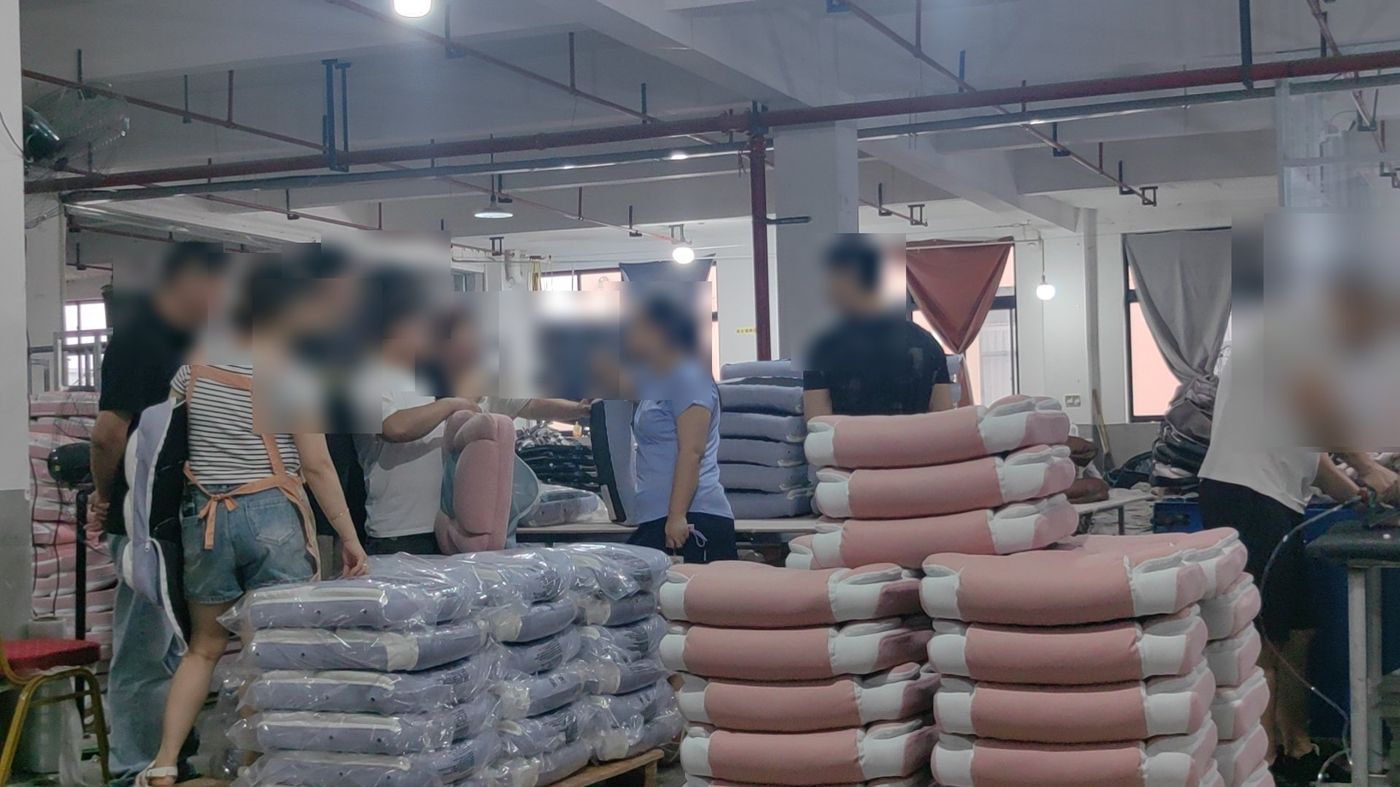
Checklist item: Visit unannounced once before signing a big contract. Any factory that objects to an unannounced visit has answered your question.
And once production starts, don't wait for final inspection. The photo above is what I still practice today: mid-line spot checks, on the floor, while the goods are being built. A defect caught at mid-line costs hours of rework; the same defect found at final inspection costs the delivery date — and the one found by your customer costs the relationship.
6. Get the tooling ownership in writing
You pay for the molds for your custom chair — but who owns them? If the answer is not written into the contract, the honest answer is "the factory does". This becomes painful exactly when your product succeeds and you want a second supplier, or when the factory changes hands.
Checklist item: Tooling ownership clause + the right to move molds on 30 days' notice. Non-negotiable.
7. Price the relationship, not just the quote
In twenty-plus years, the orders that went wrong almost never failed on engineering. They failed on communication collapse — a changed foam spec that never reached the line, a delivery date that was optimistic from day one and nobody dared to say so.
The fix is structural, not motivational: one named contact with decision power, a written change-request process (any spec change = new signed sample + updated price + updated lead time), and a schedule both sides actually believe. In 2018 I was invited by an Indian enterprise to walk its seating operation end to end — the plants that impressed me most were not the biggest, but the ones with the calmest change-management.
8. Know the direction the industry is moving
Three currents are reshaping chair sourcing right now, and buyers who see them early buy better:
- Compliance is becoming a feature. EU buyers increasingly ask about EUDR (deforestation-free supply chains) and packaging rules (EPR/PPWR). Chairs built with zero wood — fully padded structures — clear these hurdles by design, not by paperwork.
- Comfort systems are moving down-market. Engineering that was premium-only five years ago (elastic spring back systems instead of rigid plywood boards, for example) is now available at mid-market prices. Ask your factory what comfort tech they can scale, not just what they can copy.
- Regional supply chains are fragmenting the "one country" model. Tariffs and logistics keep pushing buyers toward structures like China CKD kits assembled locally, or semi-finished goods processed in a second country. The winners here are the factories flexible enough to cooperate, not compete, with new geographies.
The one-sentence version
If you remember nothing else from this page: you are not buying chairs, you are buying a system — the belt, the tests, the golden sample, the tooling clause, and the person who picks up the phone when something goes wrong. Audit the system, and the chairs take care of themselves.
Sourcing chairs, or building something that should connect with something else?
Twenty years of factory floors, container doors and golden samples — happy to put them to work on your question.
Chat on WhatsApp Email StevenView our commercial lines Ask for a quote
Why those pages publish numbers and origins instead of promises: the GHLA method — we start with people, then build the seating.